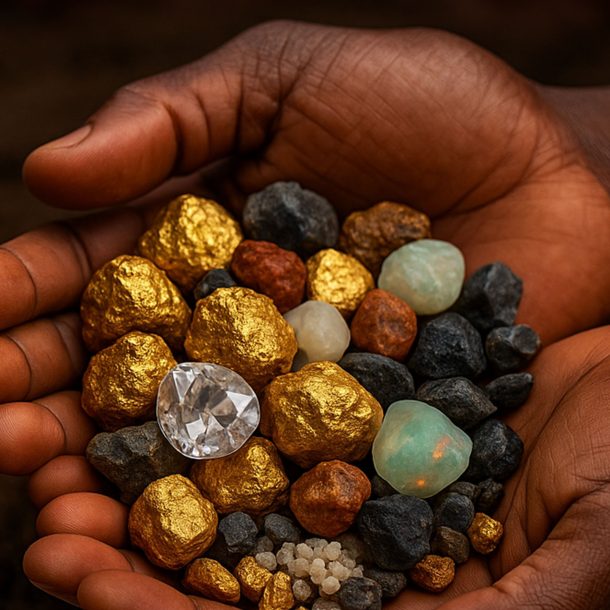
The global mining industry is experiencing a fundamental transition. While traditional commodities such as gold and oil continue to shape economies, a new category of resources is increasingly defining the future of industrial growth, technological advancement and geopolitical influence. These are critical minerals, lithium, cobalt, copper, manganese and graphite, which have now become indispensable to electric vehicles, renewable energy systems and the digital infrastructure driving artificial intelligence.
Today, countries across the world are engaged in an urgent conversation: how can they secure access to these resources that increasingly determine economic competitiveness and national resilience? The answer has become more important because what qualifies a mineral as “critical” is no longer based solely on geology. Technology, industrial policy and geopolitical considerations now shape that definition. For Africa, however, the discussion must go beyond global demand trends. Critical minerals should not merely be viewed as commodities for export; they must become instruments for industrialisation, innovation and broad-based economic transformation.
Africa’s strategic opportunity
Africa occupies a commanding position in the global critical minerals landscape. The continent hosts some of the world’s most significant reserves of minerals essential to the clean energy transition and advanced manufacturing. For instance, the Democratic Republic of Congo contributes more than 70 per cent of global cobalt production while South Africa remains a dominant player in platinum-group metals and controls a substantial share of global manganese reserves. Zimbabwe is also rapidly emerging as an important lithium producer, while several other countries are positioning themselves within the fast-evolving value chain.
These developments present a compelling reality: Africa possesses the resources necessary not merely to participate in the global critical minerals economy, but potentially to shape it. However, resource abundance alone does not guarantee prosperity. What will matter is the strategic choices countries make. It is also worth noting that encouraging examples already exist across the continent.
Zambia’s Mingomba project hosts one of the world’s most significant undeveloped high-grade copper deposits and is using artificial intelligence-driven exploration techniques through KoBold Metals. Beyond extraction, Zambia has partnered with the Democratic Republic of Congo to pursue a regional battery value chain strategy aimed at creating jobs and retaining greater value locally.
Zimbabwe has taken similarly deliberate steps. Having banned exports of raw lithium in 2022, it has progressively tightened regulations to compel local processing and encourage investments in higher-value lithium products. The rationale is straightforward: processed minerals command significantly greater value than unprocessed exports. South Africa also offers lessons through decades of investment in beneficiation and downstream industries that have generated higher revenues, stronger industrial capabilities and more skilled employment opportunities. It is imperative to note that countries making meaningful gains are not those simply exporting resources; they are those building industries around them.
Ghana’s place in the conversation
Ghana’s mineral wealth is once again gaining global attention as demand for critical resources rises in line with the transition to clean energy. With deposits of manganese, lithium and graphite, the country is strategically positioned to support modern battery technologies and industrial systems. Among these, manganese remains the most advanced, offering immediate potential for economic transformation.
For over a century, Ghana has been a reliable producer of manganese, with operations at the Nsuta Mine in the Western Region dating back to 1916. Today, the mine produces between four and five million tonnes of ore annually, placing Ghana among the world’s top four producers and affirming its importance in the global minerals market. Despite this strong track record, the country has long faced a familiar challenge, exporting raw materials with limited value addition. For years, much of Ghana’s manganese has been shipped abroad in its unprocessed form, limiting the economic benefits that could otherwise be retained domestically.
However, signs of change are emerging. The Ghana Manganese Company (GMC), operators of the Nsuta Mine, has announced plans to establish a manganese electrolytic plant. This development marks a significant step toward downstream processing and signals a broader shift towards industrialisation. By refining manganese locally, Ghana stands to increase revenue, create jobs and strengthen its industrial base.
The announcement has also highlighted growing investor confidence in the sector. Foreign investors are increasingly showing interest across the manganese value chain from exploration to in-country processing, positioning Ghana as an attractive destination for long-term mineral-based investments.
Manganese is a vital component in steel production, which underpins construction, transport and manufacturing. As West Africa continues to face a significant infrastructure deficit, demand for steel remains high. Ghana, by expanding its processing capacity, could position itself as a key supplier of steel inputs within the subregion. Beyond steel, manganese is used in fertilizers, water treatment, electronics and battery technologies, further expanding opportunities for value addition.
As global demand for critical minerals intensifies, Ghana stands at a pivotal moment. With growing investment interest and strategic initiatives underway, the country has a clear opportunity to move beyond raw exports and build a resilient, value-driven industrial economy.
Much as the challenge of value addition is not new, it clearly mirrors a broader question that has confronted many resource-rich economies over the years. It also begs the question about how natural resources can become catalysts for sustainable national development rather than isolated export commodities.
Institutions such as the Minerals Income Investment Fund (MIIF) have an important role to play in answering that question. Increasingly, the focus must extend beyond extraction to support investments that promote local participation, responsible environmental and social practices and long-term industrial growth.
Recent developments in Ghana’s lithium sector are also noteworthy. Parliament’s ratification of the Ewoyaa Lithium Project mining lease in March this year marked a significant milestone for the country’s emerging critical minerals industry. It sent a positive signal to investors and reinforced confidence in Ghana’s regulatory and institutional processes. Subsequent market developments, including Zhejiang Huayou Cobalt’s proposed acquisition of Atlantic Lithium, further underscore international confidence in Ghana’s mineral potential. However, increased investor interest must also come with heightened attention to governance. Royalties, local content obligations, environmental standards and community benefits cannot become afterthoughts. They must remain central pillars of policy and practice.
The imperative ahead
The global race for critical minerals is no longer a future prospect. It is underway. For Ghana, the challenge is not simply whether to participate, but how. The country must consciously pursue policies that support shared processing infrastructure, encourage midstream industrial activity and deepen integration into emerging battery and clean energy supply chains.
Government, industry, financial institutions and development partners all have responsibilities to fulfil. Mining companies must integrate local value creation into their business models. Financial institutions should align capital with responsible and sustainable investment principles. Policymakers must continue building frameworks that reward long-term industrial development over short-term extraction.
The stakes are significant. Critical minerals do not only represent commercial opportunity. They present a chance to redefine the relationship between natural resources and national development.
Ghana has a window of opportunity before it. The decisions taken today will determine whether the country remains a supplier of raw materials or emerges as a competitive player in the industries of the future. The moment demands deliberate action, and the time to act is now.
The writer is the Chief Executive Officer of the Minerals Income Investment Fund.